Cart
0
People also bought




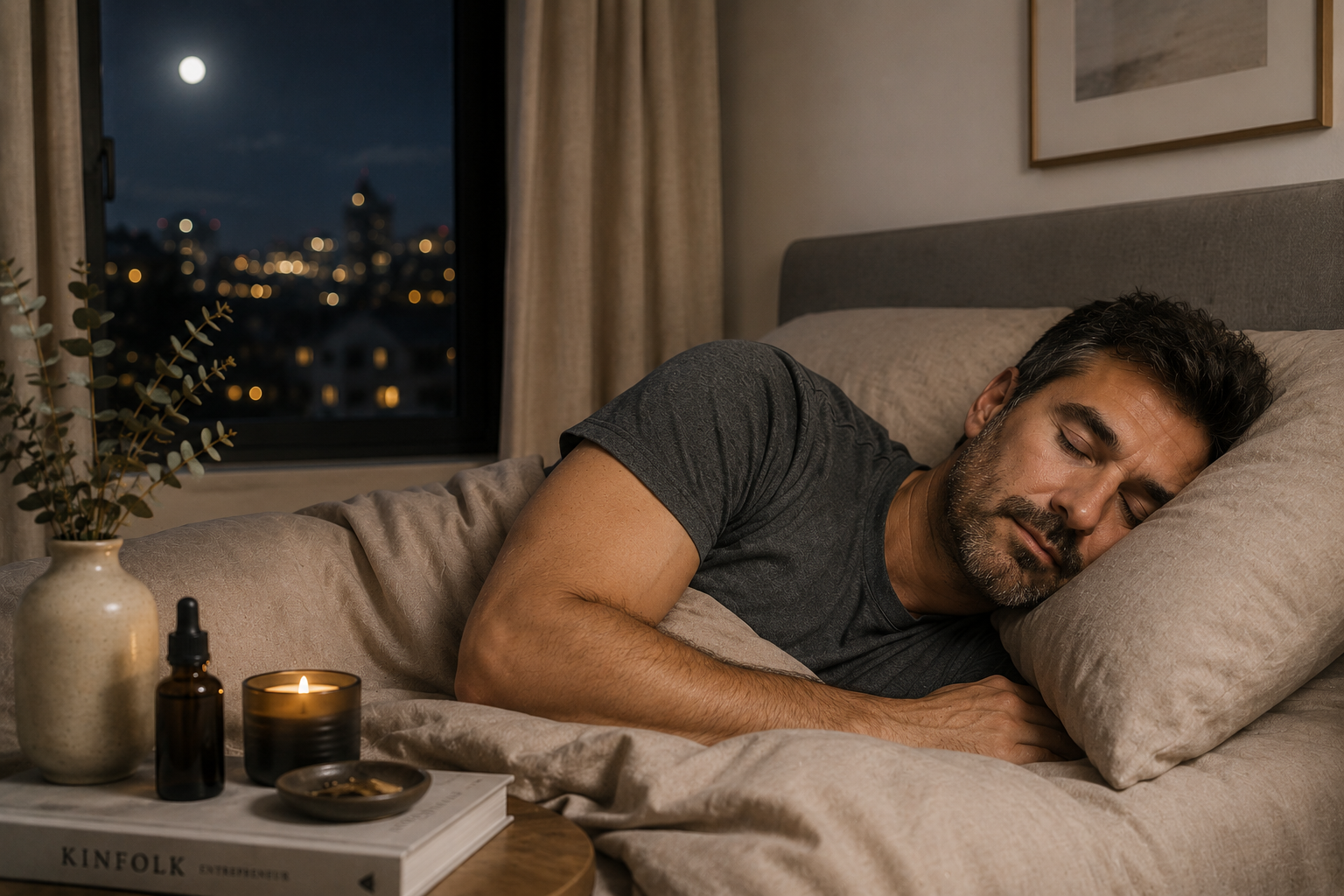
You already know the standard advice. Keep your room dark. Put the phone down. No coffee after lunch. It is all true, and for a lot of people it is also not enough. You do the obvious things and still lie there at midnight with a brain that will not stop filing paperwork.
The habits that actually move the needle are stranger and more specific. Most of them turn up at the bottom of a research rabbit hole rather than in the usual listicle. They are small, a little odd, and mostly free. Here are the ones that earn their place.
This one sounds backwards. You do not fall asleep by getting warm. You fall asleep as your core temperature drops, which is part of how your body decides it is night. So the trick is to give it a running start.
A warm bath or shower an hour or two before bed brings blood to the surface of your skin, your hands and feet warm up, and your core temperature drops faster once you get out. Researchers who pulled together the studies on this found that a warm soak, timed about ninety minutes before bed, helped people fall asleep faster. The timing is the part people miss. A bath right as you climb into bed can leave you too warm. The gap is what does the work.
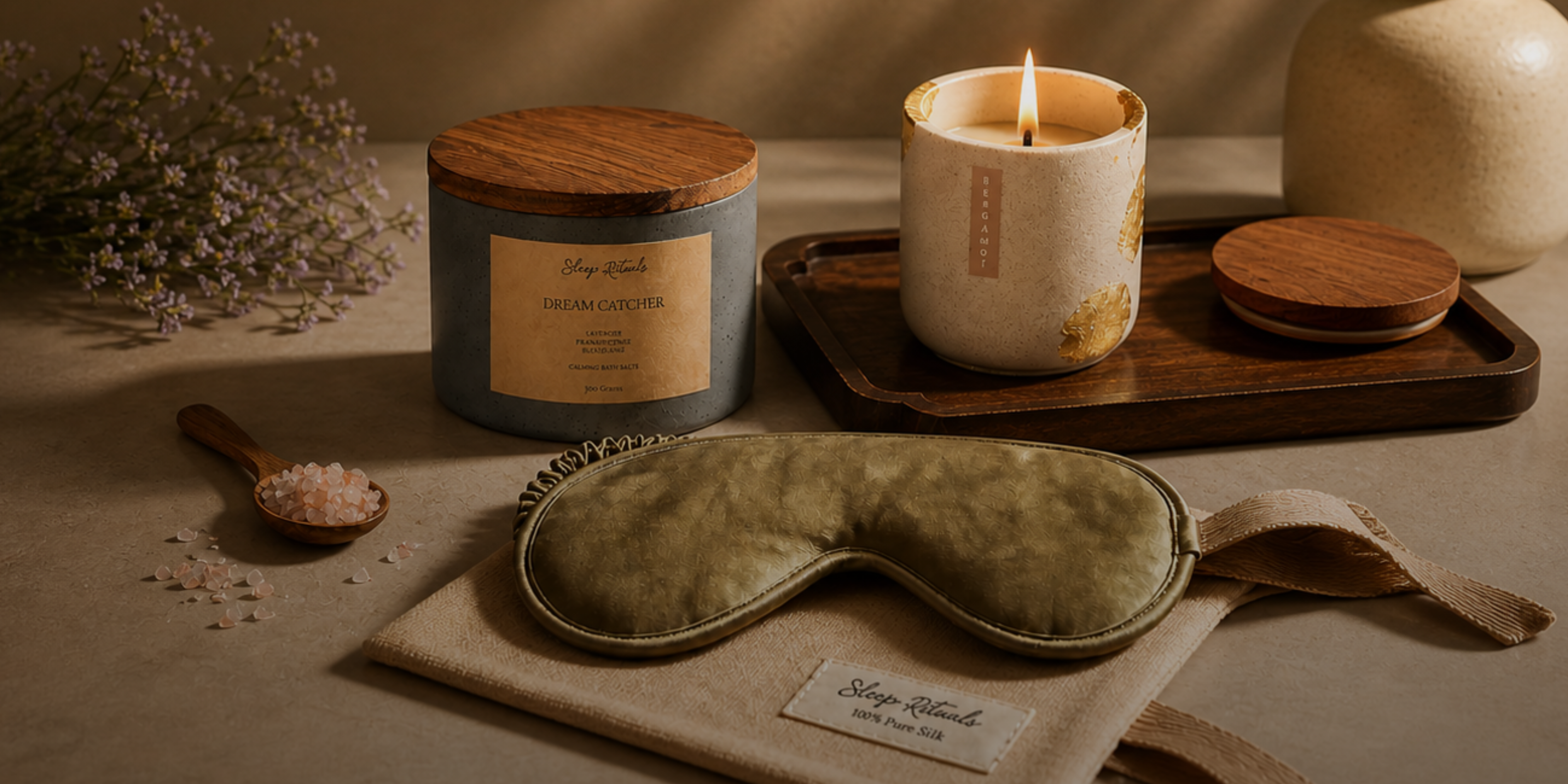
This is where one of ours fits naturally. Run a warm bath, tip in a scoop of our Dreamcatcher bath salts, and let the warmth and the scent mark the edge between the day and the night. The salts are not the science. The temperature is. The salts just make it a bath you actually look forward to.
If your mind races the moment your head hits the pillow, this is the most useful habit here, and it costs nothing.
It is called cyclic sighing. Take a normal breath in through your nose, then a second small sip of air on top to fully inflate your lungs, then a long, slow exhale through your mouth until you are empty. Then do it again. The long exhale is the active ingredient. It nudges your nervous system from alert toward calm.
A Stanford study compared a few short breathing practices against mindfulness meditation, done five minutes a day, and found that this exhale-focused breathing improved mood and lowered resting breathing rate more than meditation did. Five minutes. No app, no cushion, no free evening required. You can do it in bed, in the dark, with your eyes closed, which is exactly where it works best.
Here is one that feels too simple to matter, and works anyway.
A lot of what keeps you awake is not the day you had. It is the day you are about to have. The brain hates an open loop, so it keeps reminding you about the things you have not done yet, usually at the least helpful moment. The fix is to give those thoughts somewhere to go.
In one study, people who wrote a short to-do list for the next day before bed fell asleep faster than people who wrote about what they had already finished. The more specific the list, the bigger the effect. Keep a notebook by the bed for exactly this. Not a journal, not feelings, just tomorrow's loose ends, written down so your brain agrees to stop holding them.
This is the one that matters most for REM specifically, because REM is not spread evenly. The long, vivid stretches of dream sleep come mostly in the second half of the night. Which means the easiest way to lose REM is to lose those final hours, or to fragment them.
Two things steal that half quietly. The first is cutting your morning short. Set the alarm an hour earlier and you are not trimming an even slice off your sleep, you are taking it mostly from your richest REM. The second is the nightcap. A drink in the evening can help you drop off, then it works against you later, suppressing REM and breaking the back half of the night into pieces as your body clears it. This is not about taking away your glass of wine. Just stop expecting it to help you sleep, because it does the opposite.
Everyone tells you to block light at night. Far fewer people tell you to chase it in the morning, and it is one of the most underused levers there is.
Light is how your body sets its clock. A good dose of bright light early in the day, ideally daylight, tells your system when morning is, which in turn helps melatonin arrive on time that night. Get outside in the first part of the day, even for ten minutes, even when there is plenty else to do. It feels unrelated to sleep. It is one of the most direct things you can do for it.
None of this is a system you have to adopt whole. The trap is treating rest like another project to optimise. Pick one. The bath, or the breathing, or the notebook by the bed. Do it for a week and see if your mornings feel different.
The obvious advice is true. It just rarely does the whole job. The things that actually shift your sleep are smaller and quieter, and most of them are within reach tonight, for free.
Most REM happens in the second half of the night, so protect it. Keep a consistent wake time, try not to cut your morning short, skip the evening nightcap, and get bright light early in the day.
Yes, when it is timed about ninety minutes before bed. The warmth brings blood to your skin so your core temperature drops faster afterwards, which helps you fall asleep.
A breathing pattern that calms the nervous system. Breathe in through your nose, take a second small sip of air to fill your lungs, then a long, slow exhale through your mouth. A few minutes in bed can help you settle.
Yes. A drink may help you fall asleep, but it suppresses REM and fragments the second half of the night, so you wake less rested.
What a Good Night's Sleep Actually Does for You and How Essential Oils Work With Your Nervous System.