Cart
0
People also bought



Most of us treat sleep as the thing we can borrow against. There is always one more email, one more thing to finish, one more episode. It feels productive. It isn't. It just moves the cost somewhere you cannot see yet.
Sleep Rituals exists because of the opposite idea. The hours you spend asleep are not empty. They are some of the most active, most useful hours of the whole day. You just do not get to watch them happen.
Here is what is actually going on while you sleep. The real research, not the wellness-poster version. Not to give you another reason to feel guilty about your bedtime, but because once you see it, rest stops looking like time lost and starts looking like the work.
When you fall into deep sleep, your brain does not power down. It switches tasks.
During deep sleep, the brain replays the day. The memories you made are reactivated again and again, and that replay is what moves them from short-term holding into more permanent storage. The thing you were trying to learn at 11pm isn't really learned until you have slept on it. Literally.
Then there is the beautiful part. Researchers have shown that during sleep, the space between your brain cells opens up and fluid moves through more freely, flushing out the waste that builds up while you are awake, including the proteins linked to Alzheimer's. It is called the glymphatic system. Think of it as the nightly rinse. Your brain cleans up after itself, and it can only really do it while you sleep.
So when someone says they function fine on five hours, what that really means is the cleaning did not get done, and the bill is going on a card.
The brain is not the only thing working the night shift.
During deep sleep, your body releases its biggest pulse of growth hormone, and the amount tracks with how much deep sleep you actually get. Growth hormone is what tells your body to repair. It rebuilds muscle, and it makes collagen, the protein that keeps skin firm. Less deep sleep means less of it, which means less collagen laid down to replace what the day broke down. Beauty sleep turns out to be an almost embarrassingly literal phrase.
There is a reason a single bad night shows up on your face by morning, and it is not vanity. It is biology.
The repair list goes further. Short sleep tips your hunger hormones out of balance. Ghrelin, which says eat, goes up. Leptin, which says enough, goes down. That is why a tired day so often becomes a snack-heavy one. Your immune system does much of its coordinating while you rest, and chronic sleep loss is linked to weaker defences and more inflammation. Your heart feels it too, with regular short sleep linked to higher blood pressure risk.
None of this is meant to frighten you. It is meant to reframe the trade. Skip sleep to get ahead and you are not borrowing from tomorrow. You are borrowing from your skin, your appetite, your immune system and your heart, and they all charge interest.
This is the part that surprises people most, because it sounds vague and unmeasurable, and it turns out to be neither.
There is a body of work, much of it from Matthew Walker's lab at Berkeley, describing REM sleep, the dreaming stage, as a kind of overnight therapy. During REM, your brain re-processes the emotional moments of the day in a chemical setting almost free of stress hormones. You keep the memory of what happened, but you take the sting out of it. You sleep to remember the event, and to stop it from hurting so much.
Take that processing away and the opposite happens. In one study, people who were short on sleep showed about 60% more reactivity in the amygdala, the brain's alarm system, when shown upsetting images. That is the difference between a small problem at 9am feeling like a small problem, and feeling like the end of the world. If you have ever felt better about something after sleeping on it, that was not a figure of speech. That was your brain doing maintenance on your emotional life.
More than most of us get. Most healthy adults do best on seven to nine hours. A lot of us run on far less, with the cleaning left half-finished. It is not a willpower failure. We have built a world that treats rest as optional and then wonders why everyone is frayed.
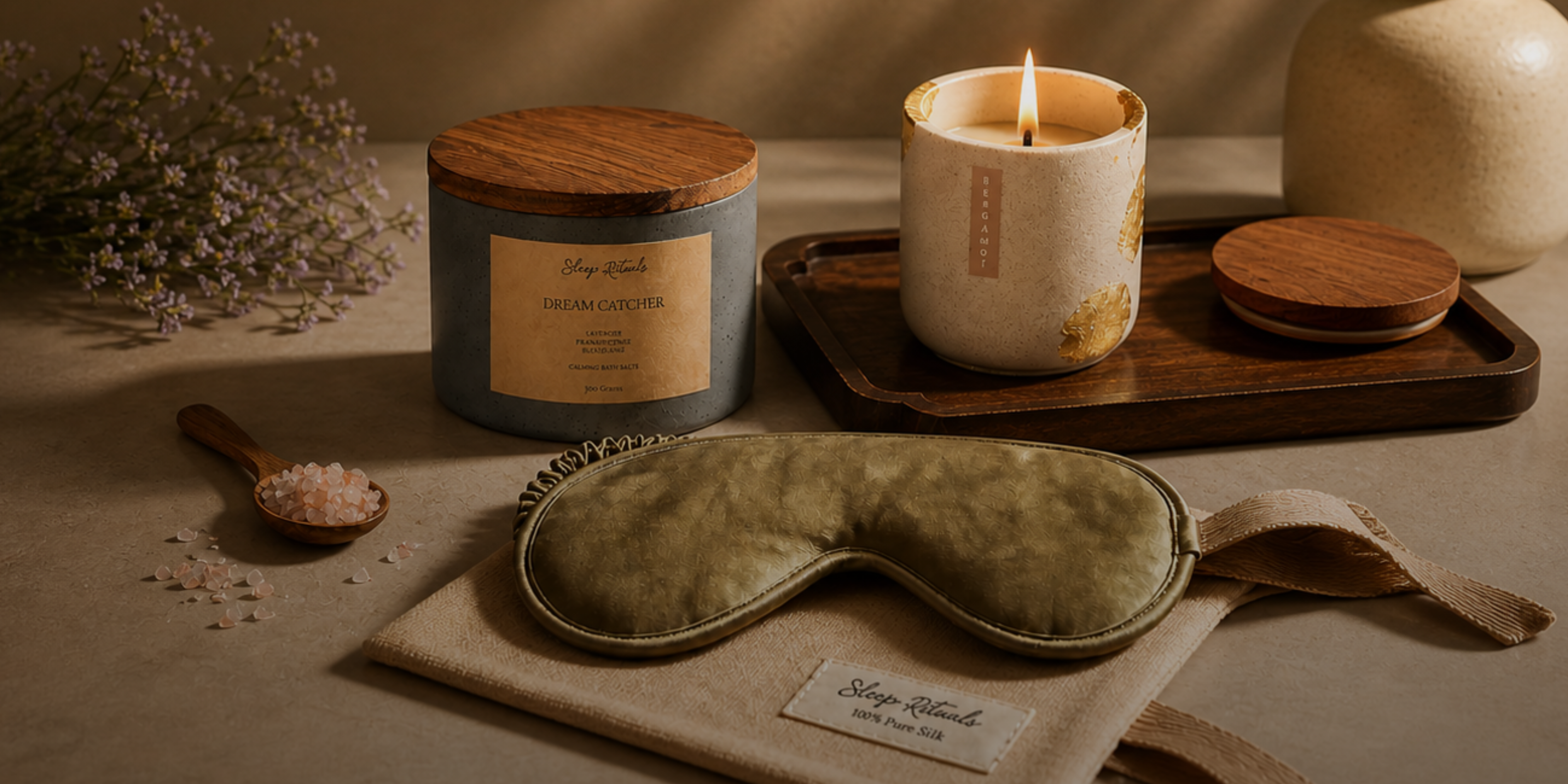
Light is the main signal your body uses to tell day from night, and darkness is part of what lets melatonin, your sleep hormone, rise. So the half hour before bed matters more than we give it credit for. Dim the lights earlier than feels necessary. Put the phone across the room. Build a short, repeatable wind-down, which is the whole idea behind everything we make. One of the simplest tools is a silk eye mask, to shut the last of the light out completely. Not because it is a thing to buy, but because blocking light is one of the simplest, most evidence-aligned nudges toward deeper rest there is.
A good night's sleep is not the reward for a productive day. It is the productive day. It is when you consolidate what you learned, clear what you don't need, rebuild your skin, steady your appetite, defend your body and smooth the day's harder edges.
You do not have to overhaul your life tonight. Just stop apologising for going to bed. Give yourself a few minutes at the end of the day to actually arrive at it. The rest, quite literally, takes care of itself.
While you sleep, your brain files away the day's memories and clears out waste, your body releases growth hormone that repairs muscle and builds skin collagen, your hunger hormones rebalance, your immune system does much of its work, and REM sleep processes the day's emotions. It is repair and maintenance, not downtime.
Most healthy adults do best on seven to nine hours a night.
Yes. Deep sleep triggers the biggest release of growth hormone, which your body uses to make collagen, the protein that keeps skin firm. Less deep sleep means less of that overnight repair.
REM sleep helps your brain process the day's emotional moments and take the edge off them. Without enough of it, the brain's alarm system reacts more strongly, so everything feels more urgent.
Beyond the Obvious: What Actually Gets You More REM and How Essential Oils Work With Your Nervous System.